Fast Service
Hiring removalists may sound as simple as booking a truck and asking someone to carry your furniture. In reality, a properly planned removal service involves much more than transportation.
Removalists assess your belongings, property access, labour requirements, equipment, packing needs, and delivery conditions before deciding how the move should be completed. Depending on the service you arrange, they may also wrap furniture, pack boxes, dismantle suitable items, handle heavy belongings, provide storage, and coordinate interstate transport.
Understanding what removalists actually do can help you request a more accurate quote and decide which services your move requires.
A removal service is the organised relocation of household or business belongings from one location to another. It usually includes a moving vehicle, a team to load and unload the goods, and equipment suitable for handling furniture and packed cartons.
The exact scope depends on what you book. A basic service may cover loading, transportation, and unloading, while a more complete arrangement may include packing, unpacking, furniture preparation, multiple collection points, storage, or special handling.
This is what separates a managed removal service from simply hiring a vehicle. Transport is only one stage. Someone must also determine:
What is being moved
How much truck space is required
How the belongings should be protected
Whether access is suitable
How many movers may be needed
Which items require extra preparation
How the load should be arranged
What must happen at delivery
A successful move usually begins with accurate information rather than last-minute decisions after the truck arrives.
A removalist needs to understand the actual job before recommending a moving plan or providing a meaningful quote.
The inventory should include furniture, appliances, cartons, outdoor belongings, garage contents, and anything stored in sheds, wardrobes, balconies, or storage cages.
Bedroom count can provide a starting point, but it does not show the true volume. Two three-bedroom homes may contain very different amounts of furniture and boxes.
Tell the removalist about:
Beds and mattresses
Lounges and armchairs
Dining and outdoor settings
Cabinets, desks, and bookcases
Refrigerators and washing machines
Televisions, mirrors, and artwork
Gym and sporting equipment
Pianos and heavy objects
Approximate carton quantity
Garage and shed contents
Clear photographs can help when an item is unusually large, fragile, heavy, or difficult to describe.
A short driving distance does not necessarily mean a quick move. Property access can have a major effect on the labour and time involved.
Removalists may need information about:
Stairs and floor levels
Narrow corridors and doorways
Small or slow lifts
Loading-dock requirements
Long carrying distances
Steep or narrow driveways
Limited street parking
Low-clearance entrances
Tight corners
Building access hours
Access must be considered at both the pickup and delivery addresses. A large lounge may leave the original home easily but fail to fit through the entrance at the destination.
Apartment customers should confirm service-lift bookings, loading-zone access, building rules, and permitted moving hours before finalising the booking.
Pianos, safes, stone tables, pool tables, oversized mirrors, commercial equipment, and objects weighing more than 100 kilograms may require additional movers, preparation, or equipment.
These belongings must be disclosed during the quote. Leaving them off the inventory may mean the original moving plan is unsuitable.
Heavy-item planning is not only about the item’s total weight. Shape, weight distribution, available handholds, stairs, surfaces, and turning space also matter.
Safe Work Australia identifies lifting, lowering, pushing, pulling, carrying, and moving objects with high force or awkward postures as potentially hazardous manual tasks. Appropriate labour and equipment help manage these risks.
Moving companies offer different service levels. Customers should confirm exactly what is included rather than assuming every task forms part of a standard booking.
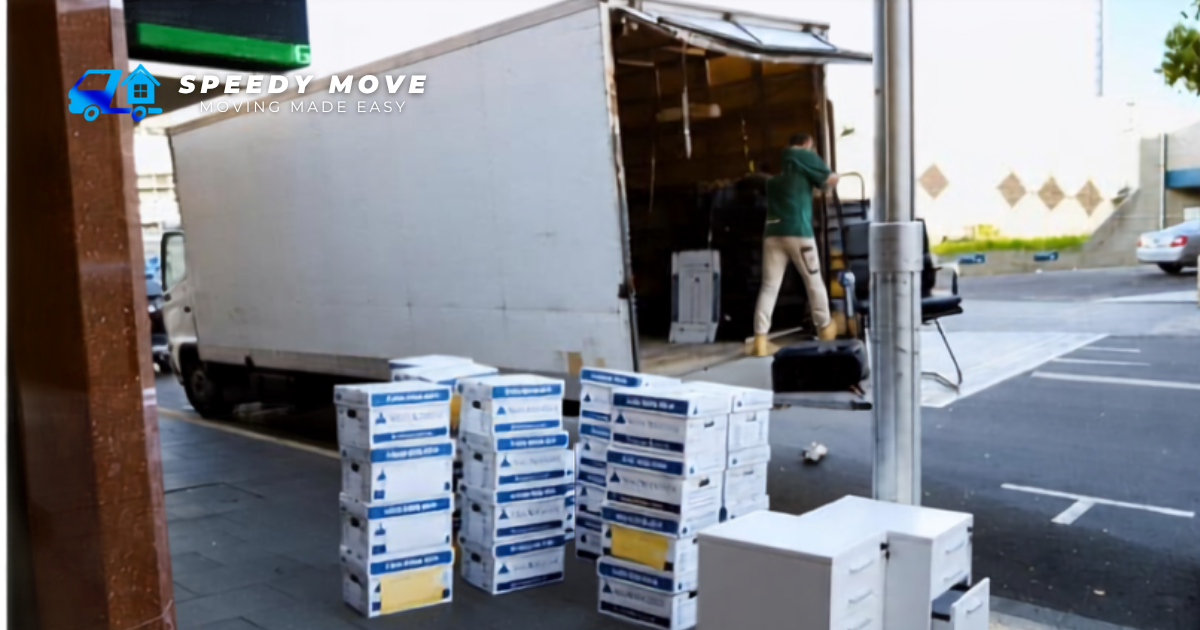
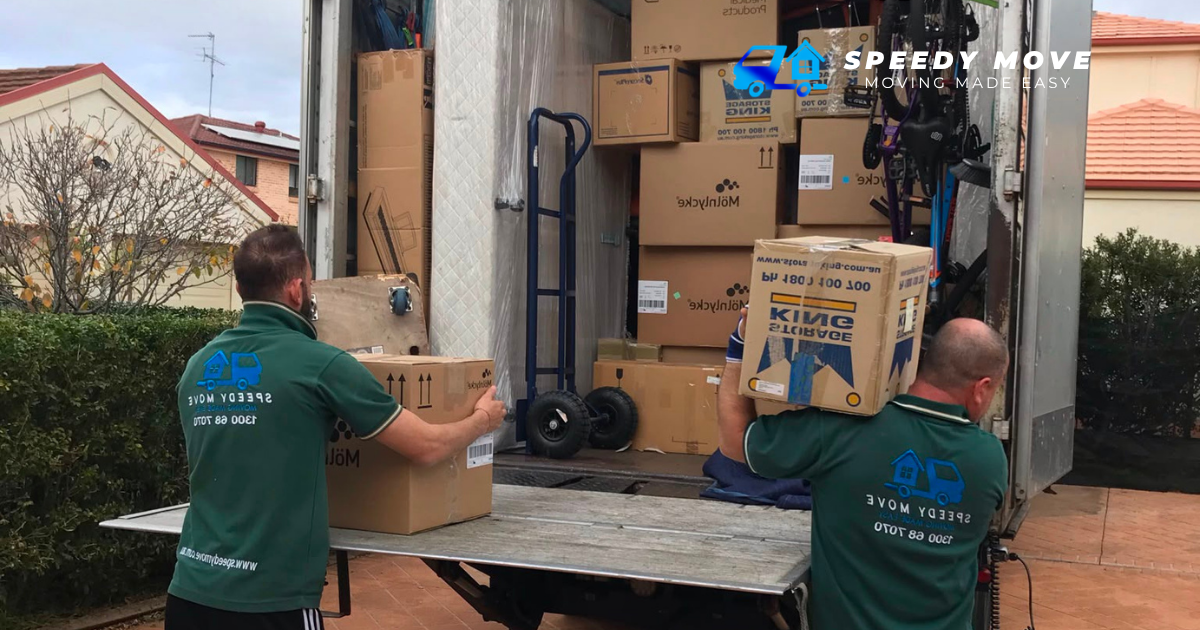
The central removal service normally covers loading agreed belongings, transporting them to the destination, and unloading them.
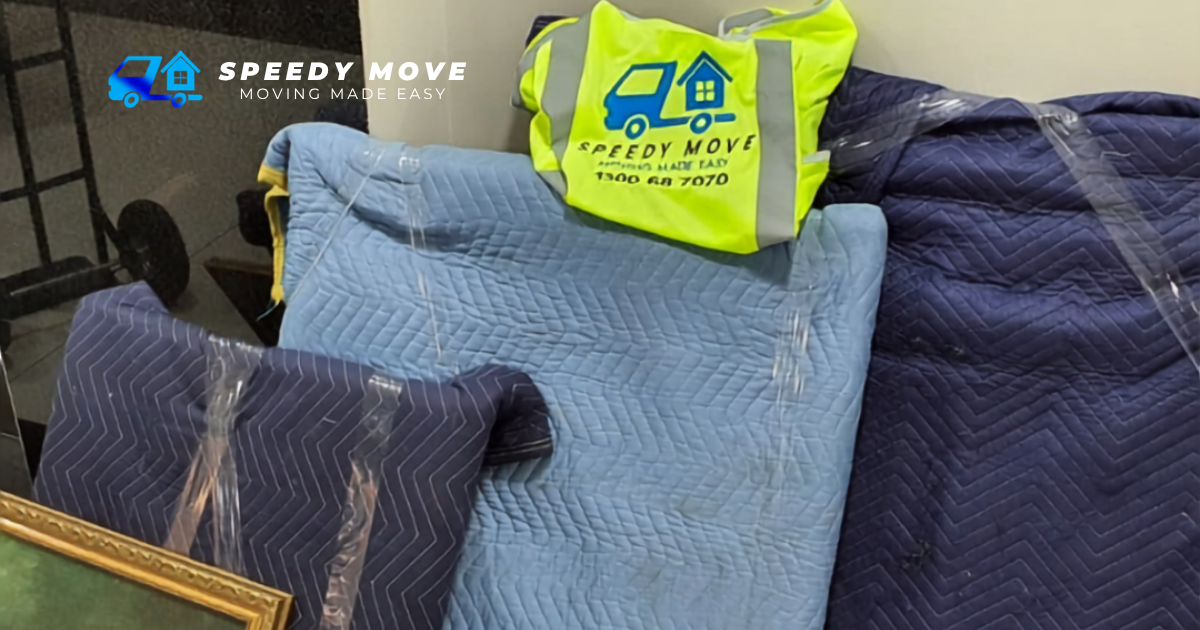
The moving team plans the loading order so the truck’s space is used efficiently and belongings are supported during transport. Furniture blankets, straps, trolleys, ramps, and other equipment may be used depending on the items and access.
At delivery, the team unloads the agreed inventory and places belongings in the nominated rooms where reasonably accessible. Clear carton labels help movers put boxes in the correct areas and reduce the amount of rearranging required later.
Customers should decide where large furniture will go before the truck arrives. Repeatedly repositioning heavy items can extend the job.
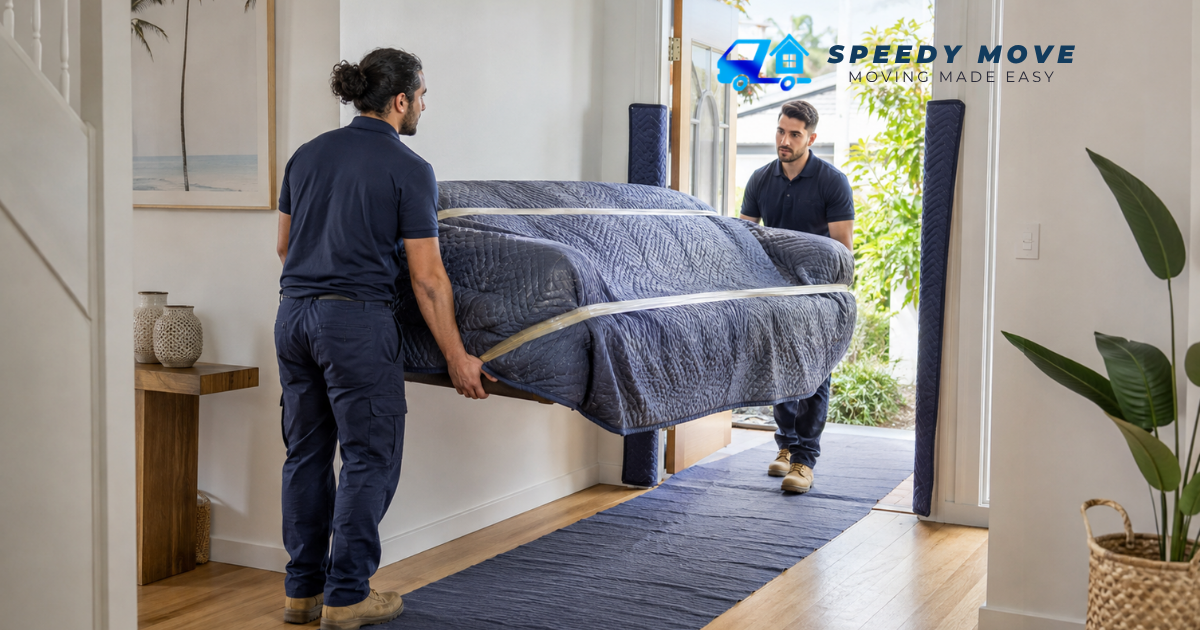
Furniture may need wrapping before it can be moved safely through the property and loaded into the vehicle.
Appropriate protection can help reduce contact damage, dust exposure, and movement during transport. The required method depends on the surface, construction, shape, and fragility of each item.
Tell the moving team about polished timber, glass, stone, leather, mirrors, artwork, antiques, and delicate finishes before the move.
Protection does not make an item indestructible. Customers still need to disclose existing damage, weak joints, loose sections, and unstable flat-pack furniture.
Some customers pack their own belongings, while others arrange professional packing assistance.
A packing service may include cartons, wrapping materials, careful preparation of household contents, and room-based labelling. The scope should be agreed beforehand because packing an entire home differs considerably from packing only the kitchen or fragile items.
If you pack yourself, begin early and use strong cartons. Pack heavy belongings in smaller boxes and lighter items in larger cartons. Fill empty space so contents do not move excessively, but avoid making boxes too heavy to lift.
The Australian Furniture Removers Association recommends grouping items from the same room, marking the destination on the top and at least one side of each carton, and using smaller heavy-duty cartons for heavier belongings.
Unpacking assistance may involve opening cartons, placing contents on available surfaces, and removing used packing materials, depending on the agreed service. It does not necessarily include organising cupboards, styling rooms, or cleaning unless specifically arranged.
Large furniture may need to be dismantled when it cannot fit safely through doorways, corridors, lifts, or stairwells.
Common examples include:
Bed frames
Dining tables
Modular lounges
Desks
Shelving
Some wardrobes
Outdoor settings
Not every item should be taken apart. The decision depends on its construction, condition, manufacturer’s instructions, and access route. Some flat-pack furniture may become unstable after repeated dismantling and reassembly.
If Speedy Move will assist with suitable furniture dismantling and reassembly, identify the items during the quote. This allows time, tools, and labour to be considered.
If you dismantle furniture yourself, photograph the connections and place all screws, brackets, and fittings in separate labelled bags.
A piano should never be described simply as ordinary furniture. Its type, size, shape, construction, weight distribution, and location may change the entire handling plan.
When requesting a quote, provide:
Piano type
Brand and model
Measurements
Clear photographs
Stairs and landings
Doorway and corridor widths
Lift dimensions
Parking and carrying distance
Desired placement at delivery
Do not assume the piano’s own wheels can be used across rooms, thresholds, ramps, or outdoor surfaces.
Other heavy belongings, including safes, stone furniture, gym equipment, and commercial machinery, also require advance disclosure. Photos and dimensions allow the team to assess whether the proposed access is workable.
A local move generally takes place within the same city or surrounding area. A regional move involves travel beyond the local service area but remains within the state or a nearby region.
Although the driving distance may be shorter than an interstate relocation, local moves can still be complex. Apartment access, difficult parking, steep driveways, multiple stops, and unfinished packing can extend the job.
For local bookings, Speedy Move requires a minimum of two hours plus the applicable call-out arrangement. The final time depends on the inventory, travel, access, packing readiness, and requested services.
Provide accurate information before booking rather than relying only on an hourly-rate comparison.
Interstate moves require more coordination because collection and delivery may not happen on the same day. The route, load volume, truck schedule, access, and delivery window all affect the plan.
Customers should provide a complete inventory and clarify:
Collection and delivery addresses
Preferred dates
Acceptable delivery window
Contact person at each property
Access and parking
Temporary accommodation
Items needed immediately
Storage requirements
Heavy or fragile belongings
Pack an essentials bag containing medication, identification, chargers, clothing, toiletries, important paperwork, and anything required before the main load arrives.
Backloading may be available for some routes. This allows your belongings to use available truck space on a compatible journey. It can be practical for customers with flexible dates, but availability depends on the route, schedule, volume, and access.
Office relocations require planning around business continuity as well as physical transport.
A commercial move may include desks, chairs, filing systems, stock, appliances, equipment, and boxed workplace contents. The business should determine which departments must remain operational and which departments or items should move first.
A clear office plan may include:
Numbered workstations
Room or department labels
Equipment inventories
Lift and loading-dock bookings
Staff responsibilities
Restricted-access areas
Priority cartons
Delivery sequencing
Computers, servers, telecommunication systems, and specialist equipment may need preparation by qualified IT technicians or the manufacturer. Removalists should not be expected to disconnect, configure, or certify technical systems unless that work has been specifically arranged with a suitably qualified provider.
Storage may be required when lease dates, settlements, renovations, or interstate schedules do not align.
Options may include traditional self-storage, mobile storage, or removalist-arranged storage. The right choice depends on how frequently you need access, how much you are storing, how long it will remain there, and who will transport it.
If storage will form part of the move, disclose it at the start. Adding storage after collection may change the handling, delivery schedule, labour, and quote.
Do not assume storage insurance is automatically included. Moving insurance, contents insurance, and storage insurance may have different conditions and exclusions. Confirm any required cover directly with your insurer.
Keep passports, medication, jewellery, keys, legal records, and irreplaceable items securely with you.
Unless packing assistance has been booked, cartons should be packed, sealed, and labelled before the team arrives.
Complete these tasks in advance:
Finish packing all agreed belongings
Separate items that are not moving
Empty furniture where required
Defrost and dry refrigerators and freezers
Secure loose appliance components
Reserve lifts and loading areas
Arrange truck parking
Clear hallways and entrances
Keep children and pets away from work areas
Place valuables and documents in your vehicle
Confirm keys and access codes
Check that utilities are connected at the destination
Gas cylinders, fuel, chemicals, and other restricted materials must not be hidden inside ordinary cartons. Ask Speedy Move which items cannot be transported before moving day.
AFRA’s moving dos and don’ts recommend keeping jewellery, passports, and valuable documents separate, checking appliance instructions, and having gas cylinders appropriately prepared rather than placing them into the household load.
A quote should help you understand how the price is calculated and which services are included.
Check whether it explains:
Hourly, half-hourly, fixed, or volume-based pricing
Minimum booking time
Call-out or travel charges
Deposit
Number of movers
Additional-mover rates
Packing materials
Dismantling and reassembly
Heavy-item requirements
Stair or long-carry conditions
Waiting time
Storage
Multiple stops
Cancellation or rescheduling terms
A low advertised rate does not automatically produce the lowest final cost. Compare the complete service, not only one number.
Provide the same inventory and access information to every company you contact. Quotes based on different information cannot be compared fairly.
The Australian Consumer Law also applies to eligible removal services. The ACCC’s industry guide specifically identifies furniture removal as a personal service and explains the importance of due care and skill and clearly communicating agreed costs.
Keep your written quote, booking confirmation, inventory, payment records, photographs, and relevant communication.
Begin by checking whether the business provides a clear written quote, verifiable contact details, service information, and understandable booking conditions.
Ask:
What is included in the quoted service?
How will additional time or work be charged?
What access information is required?
Do heavy items need advance approval?
Who will complete the move?
What equipment will be available?
What insurance arrangements apply?
What happens if the moving date changes?
How are complaints handled?
Reviews can help, but they should not be your only evidence. Look for detailed comments about communication, punctuality, handling, quote accuracy, and problem resolution.
Be cautious when reviews are vague, repetitive, or inconsistent with the company’s history. The ACCC warns that fake or misleading online reviews can affect how customers choose products and services.
A reliable removalist should also ask you questions. If a company offers a confident quote without requesting an inventory, addresses, access information, or heavy-item details, ask what assumptions the estimate is based on.
Removalists transport the belongings included in the agreed scope, but some tasks may require another provider or a separate booking.
Unless specifically arranged, do not assume movers will:
Disconnect gas appliances
Complete electrical work
Disconnect plumbing
Remove fixed cabinetry
Dismantle every type of furniture
Transport hazardous materials
Install wall-mounted televisions
Configure computers or networks
Clean either property
Dispose of unwanted belongings
Move undisclosed heavy items
Provide automatic insurance cover
Ask before moving day if you are uncertain. It is easier to arrange a qualified technician, cleaner, waste service, or other specialist in advance than to solve the problem while the truck is waiting.
Speedy Move provides local, regional, and interstate removal services across Brisbane, the Gold Coast, Sydney, Wollongong, Melbourne, and Adelaide.
Depending on your move, we can also assist with:
Home removals
Office and commercial moves
Packing and unpacking
Furniture wrapping
Suitable dismantling and reassembly
Piano and heavy-item moving
Backloading
Short- and long-term storage
When requesting a quote, provide the pickup and delivery addresses, preferred date, complete inventory, estimated number of boxes, access information, and photographs of unusual belongings.
Mention stairs, lifts, parking, loading docks, long carrying distances, dismantling needs, and anything weighing more than 100 kilograms.
The clearer the information, the more accurately the team can plan the labour, truck space, equipment, and time required.
Planning a move? Contact Speedy Move for a personalized quote based on your actual belongings, locations, access, and service requirements.
A removalist generally loads, transports, and unloads the belongings included in the agreed inventory. Packing, storage, dismantling, reassembly, and heavy-item handling may need to be arranged separately.
They can provide packing assistance when it is booked in advance. Confirm whether the service covers the full home, selected rooms, fragile belongings, packing materials, or unpacking.
Speedy Move can assist with suitable furniture dismantling and reassembly when arranged beforehand. Some furniture should not be dismantled because of its condition, construction, or manufacturer’s instructions.
Removalists do not automatically complete plumbing, gas, or electrical work. These tasks may need to be performed by an appropriately qualified tradesperson.
The cost may depend on labour time, travel, inventory, truck space, property access, crew size, heavy items, packing, storage, and other requested services.
Provide both addresses, your preferred date, complete inventory, carton estimate, stairs, lifts, parking, carrying distances, heavy items, dismantling needs, and clear photographs where useful.
Speedy Move can assist with piano moves when the instrument and access are assessed in advance. Provide the piano type, model, dimensions, photographs, stairs, lifts, and parking details.
Keep medication, identification, keys, jewellery, chargers, important documents, valuable items, and essential supplies securely with you.