Fast Service
Moving furniture through a home can be harder on the property than many people expect. A sofa brushing against a hallway, a trolley rolling over timber flooring, or a table catching a doorframe can leave scratches and marks within seconds.
The risk can be greater in Sydney properties with narrow terrace-house hallways, apartment lifts, shared corridors, tight staircases, and limited loading access. Protecting these areas before the first item is carried out can make moving day safer and help reduce avoidable damage.
Here is how to prepare your floors, walls, doors, and common areas before your removalists arrive.
Before moving any furniture, walk through the complete route from each room to the moving vehicle.
Look for:
Narrow doorways and hallways
Tight corners
Stairs and landings
Low ceilings and light fittings
Uneven flooring
Loose rugs or mats
Door handles that reduce clearance
Furniture positioned along walkways
Apartment lifts and shared corridors
Changes between carpet, tiles, and timber floors
Measure large pieces of furniture and compare their dimensions with the doors, lifts, corridors, and staircases they need to pass through.
Pay particular attention to lounges, wardrobes, bed frames, dining tables, refrigerators, pianos, and bulky outdoor furniture. If something will not fit safely, it may need to be dismantled or handled differently.
Speedy Move can assist with furniture dismantling and reassembly when this is discussed during the quote process.
A clear moving route helps protect both the property and the people carrying your belongings.
Before loading begins:
Remove shoes, toys, plants, and small furniture
Roll up loose rugs and mats
Take fragile decorations off nearby walls
Move boxes away from doorways
Secure pets in a separate room
Keep children away from active loading areas
Make sure stairs and entrances are well lit
Clean up water, dust, or loose debris
SafeWork NSW notes that tidy, unobstructed work areas help reduce slips and trips. Floors should also remain free from hazards such as loose materials and cables. You can read its general guidance on safe floors, entries, and walkways.
Clearing the route also allows the moving team to concentrate on controlling the furniture rather than stepping around obstacles.
Timber, engineered wood, and laminate flooring can be scratched by grit, dragged furniture, unsuitable wheels, or objects dropped during the move.
Depending on the flooring and the moving conditions, suitable protection may include:
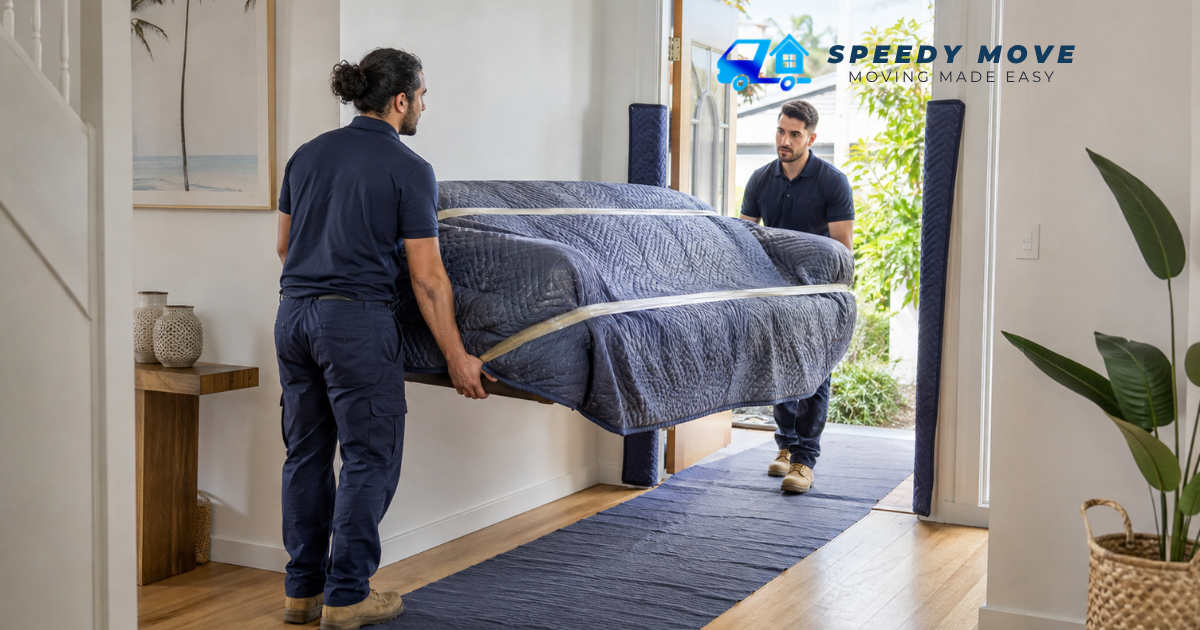
Purpose-made floor runners
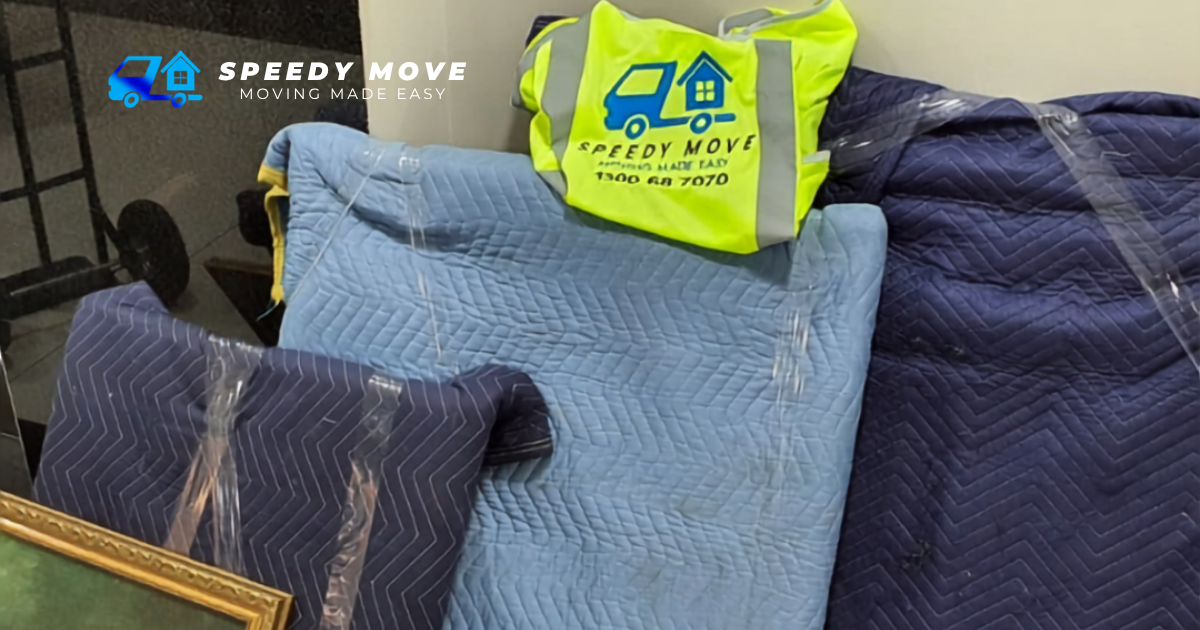
Clean moving blankets
Protective floor sheets
Furniture sliders suitable for the surface
Clean cardboard for light-duty areas
Entrance mats to reduce tracked-in dirt
Floor coverings should be clean, dry, and secured so they do not slide or create a trip hazard. Avoid placing adhesive tape directly onto finished flooring unless the flooring manufacturer confirms that it is safe. Some adhesives can leave residue or affect the finish.
Never drag furniture directly across timber or laminate flooring. Even a small piece of grit trapped underneath a furniture leg may leave a long scratch.
Tiles and stone floors may resist ordinary scratching, but they can still chip or crack when a heavy or sharp-edged object is dropped.
Heavy furniture and appliances should remain controlled and upright wherever possible. Suitable moving equipment may help distribute weight and reduce unnecessary lifting or dragging.
Before moving over tiled areas:
Check for existing cracks or loose tiles
Remove loose dirt and debris
Cover high-traffic sections
Protect changes in floor height
Avoid placing concentrated weight on vulnerable edges
Identify slippery areas, particularly near entrances
Marble, polished stone, and other specialist surfaces may require protection recommended by the manufacturer or flooring professional.
Carpet is less likely to be scratched, but it can be stained by dirty footwear, trolley wheels, wet boxes, or outdoor debris.
Consider using suitable carpet runners in frequently used areas. Entrance mats can also help stop dirt from being carried inside.
Avoid using plastic or other coverings that become slippery or bunch underfoot. Any protective material should remain flat and stable throughout the move.
If rain is expected, prepare a plan for wet footwear and equipment. Replace damp coverings instead of allowing moisture and dirt to spread through the property.
Doorframes and exposed corners are particularly vulnerable because large furniture may only have a small amount of clearance.
Depending on the property, protection may include:
Padded doorframe covers
Corner guards
Clean moving blankets
Suitable temporary protective padding
Removal of detachable doors by an appropriate person
Do not attach strong tape directly to painted walls, timber trims, or finished surfaces without checking whether it can be removed safely.
If a piece of furniture is too wide, do not force it through the opening. Stop and reassess whether it can be dismantled, rotated safely, or moved using a different route.
Let your removalist know in advance about unusually narrow doors, tight corners, or items that may require additional preparation.
Removing a door from its hinges can sometimes create additional clearance, but it should only be done when it is safe and appropriate for that particular door.
Some doors are heavy, fitted with closers, connected to security systems, or form part of a fire-safety system. Apartment and common-property doors may also be subject to building rules.
Do not alter or remove a fire door, security door, or common-property fixture without approval from the relevant building manager or qualified professional.
For Sydney apartments and strata properties, contact the building manager before moving day. NSW Government guidance explains that residents must follow their scheme’s specific strata by-laws, which may cover parking, noise, and the use of common property.
Apartment moves require protection beyond the inside of your unit. The lift, lobby, loading dock, hallway, and other common areas may also need to be prepared.
Ask your strata manager, building manager, or concierge:
Whether the service lift must be booked
Whether lift padding will be supplied
Which entrance the movers should use
Whether a loading dock must be reserved
Whether protective floor coverings are required
Which moving hours are permitted
Whether a moving deposit applies
If the removalist’s details must be provided
Whether there are truck-height restrictions
Who will provide access on moving day
Some Sydney buildings only allow moves during specific hours. Others require advance notice or impose conditions for using lifts and loading areas.
Confirm these arrangements at both the pickup and delivery properties. A delay in accessing the lift or loading area can affect the moving schedule.
Protecting the property becomes easier when furniture is properly prepared.
Before your removalists arrive:
Empty drawers, wardrobes, and cabinets
Remove loose shelves
Secure doors and movable parts
Take detachable legs off large tables where appropriate
Separate modular furniture
Roll and secure rugs
Disconnect appliances
Place fittings and screws in labelled bags
Identify fragile glass, mirrors, and polished surfaces
Explain which furniture requires dismantling
Do not use tape directly on furniture finishes. Protective materials should be appropriate for the item and secured without damaging painted, polished, fabric, or leather surfaces.
Speedy Move provides packing and unpacking assistance and uses protective packing and transit equipment to help prepare belongings for transport.
Property protection starts during the quote process—not when the truck arrives.
Provide accurate information about:
Stairs and the number of flights
Narrow corridors
Small lifts
Long carrying distances
Steep driveways
Limited parking
Loading-dock requirements
Low-clearance entrances
Heavy or oversized items
Furniture that may require dismantling
Photos or a short access video can help show the route more clearly. Include the street entrance, driveway, stairs, lift, hallways, and any tight turns.
Speedy Move also asks customers to identify pianos and heavy furniture in advance so the appropriate handling requirements can be considered.
Trying to move an item that is too heavy or awkward can result in injury as well as damage to the property.
Hazardous manual tasks can involve lifting, carrying, pushing, pulling, or holding loads that require high or sudden force or place the body in an awkward position. Heavy furniture, stairs, and restricted spaces can make these risks more difficult to control.
If an item cannot be moved comfortably and safely, stop. Do not rely on improvised equipment or attempt to carry a piano, safe, stone table, or large appliance without suitable experience and resources.
Professional assistance may be appropriate when:
The item is unusually heavy or fragile
Stairs or tight corners are involved
The furniture cannot be safely dismantled
The property has delicate finishes
Specialist moving equipment may be required
There are not enough capable people to control the item
Access is restricted at either property
Take clear photos of floors, walls, doors, lifts, and shared areas before loading begins.
This is especially useful when:
You are leaving a rental
You are moving through common property
The building requires a moving deposit
There is existing damage
Contractors or several moving parties are using the property
The move involves newly installed flooring or finishes
Photograph existing scratches, chips, cracks, and marks. Repeat the inspection once the move is complete.
For apartment buildings, follow any inspection or reporting procedure required by the building manager.
It is easy to focus entirely on the home you are leaving, but the destination needs the same preparation.
Before delivery:
Confirm parking and vehicle access
Reserve the service lift
Clear the route to each room
Check the new property’s flooring
Protect narrow doors and corners
Identify where large furniture will be placed
Measure difficult access points
Keep keys and access cards available
Make sure someone can provide entry
Deciding where furniture belongs before unloading can reduce unnecessary handling. It also prevents a heavy piece from being moved through the property more than once.
Protecting a property is not about covering every surface without a plan. It involves assessing the route, using suitable materials, preparing the furniture, and communicating access conditions before moving day.
Speedy Move provides home and office removals across Sydney and other listed Australian service areas. Customers can also arrange:
Packing and unpacking
Furniture dismantling and reassembly
Piano removals
Heavy-furniture moving
Local and interstate removals
Backloading
Short- and long-term storage
When requesting your personalised quote, include your inventory, addresses, preferred date, parking conditions, floor level, lift arrangements, stairs, and any delicate surfaces or difficult access points.
Planning a move in Sydney? Contact Speedy Move and share the details the team needs to prepare for your property and belongings.
Suitable protection depends on the flooring. Purpose-made floor runners, clean protective sheets, moving blankets, or surface-appropriate furniture sliders may help. Any covering should be dry, stable, and suitable for the floor underneath.
Avoid placing adhesive directly onto finished floors unless the flooring manufacturer confirms that it is safe. Tape may leave residue or damage certain finishes. Secure protective materials in a way that does not create a trip hazard.
Measure the furniture and doorway first, remove loose or detachable parts, protect vulnerable frames with suitable padding, and avoid forcing anything through a narrow opening. Tell your removalist about tight access before moving day.
This depends on the building. Contact the strata manager, building manager, or concierge to ask whether lift padding is supplied, whether the service lift must be reserved, and what moving rules apply.
Yes. Speedy Move can assist with furniture dismantling and reassembly when arranged in advance. Identify the relevant items during the quote process.
Include stairs, floor levels, lifts, narrow entrances, long carrying distances, parking restrictions, loading docks, steep driveways, and any unusually heavy or oversized furniture.